Photography Standards for SaaS Websites
The key question isn’t whether your SaaS imagery looks modern. It’s whether it makes the product easier to evaluate. If a visitor can’t understand what they’re seeing within seconds, the image isn’t supporting the page — it’s adding friction.
Most SaaS websites look modern.
They use gradients, soft shadows, minimal layouts, and carefully composed dashboard mockups. The typography is clean. The spacing is deliberate. The visual language feels contemporary and controlled.
And yet, the product is often unclear.
This is the tension that makes photography standards for saas websites different from most other categories. The design is polished. The interface is present. But the visual layer frequently prioritises mood over comprehension.
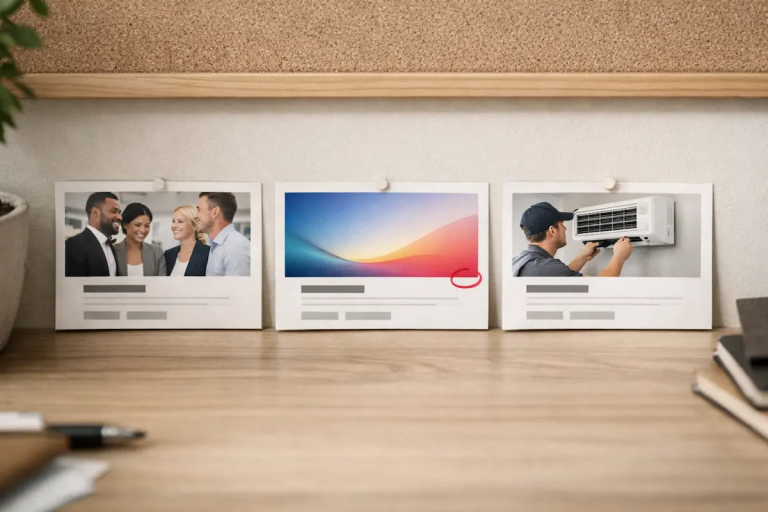
Instead of clarifying what the software does, imagery often abstracts it. Floating UI panels hover against coloured backgrounds. Screens are tilted at dramatic angles. Stock photos of teams collaborating replace direct visual explanation. The product becomes implied rather than demonstrated.
In consumer brands, emotional abstraction can create aspiration. In SaaS, abstraction can introduce friction.
Visitors arriving at a software website are usually evaluating capability. They want to understand how the tool works, whether it fits their workflow, and whether it solves a specific problem. If the imagery complicates that understanding, even subtly, trust erodes.
This is why photography standards for saas websites cannot be borrowed directly from lifestyle branding or corporate marketing templates. Software products demand visual precision. They require clarity before atmosphere.
The issue is rarely that the photography is poor. It is that the role of the image is undefined. Is the image meant to clarify a feature? Reinforce scale? Signal trust? Or simply decorate a hero section?
Without clear standards, SaaS imagery drifts toward visual fashion. Gradients become dominant. Screens shrink. People-with-laptops imagery fills space. The product itself becomes secondary.
Before discussing style, it is worth asking a more structural question:
What should imagery on a SaaS website be responsible for?
The Product Is Often Hidden Behind Abstraction
Many SaaS homepages lead with an impressive visual.
A dashboard floats in three-dimensional space. Interface panels overlap against a soft gradient background. Subtle shadows and motion effects suggest depth. The overall composition feels modern and technically sophisticated.
But the product itself is rarely shown in context.
Abstraction is attractive because it signals polish. It allows designers to emphasise aesthetic cohesion. It reduces the risk of exposing messy details inside real software interfaces. Yet in many cases, abstraction replaces clarity.
This pattern reveals one of the core weaknesses in photography standards for saas websites.
The product becomes decorative.
Screens are angled to look dynamic rather than readable. Key features are partially obscured by overlays. Interface elements are too small to interpret. Visual drama replaces functional explanation.
In branding-heavy industries, that trade-off may work. In SaaS, it introduces friction.
Visitors evaluating software are often trying to answer practical questions:
What does the dashboard look like?
How complex is the interface?
What tasks can I complete here?
How does this compare to alternatives?
When the primary visual obscures those answers, the page relies entirely on copy to compensate. The imagery no longer supports understanding. It competes with it.
This does not mean SaaS websites should present raw screenshots without refinement. It means abstraction must serve explanation rather than replace it.
As discussed in Using Photography to Clarify Product Pages, imagery can reinforce functionality when it highlights relevant areas, demonstrates scale, and situates features within real workflows. The goal is not aesthetic neutrality. It is purposeful emphasis.
A gradient background is not the problem. A floating UI mockup is not inherently wrong. The issue emerges when the visual treatment makes the product less legible.
Strong SaaS imagery does one of three things:
- Clarifies a feature
- Demonstrates usability
- Reinforces credibility
When it does none of these, it becomes atmosphere.
Abstraction feels modern. Clarity builds trust.
For software companies competing in crowded markets, that distinction is not cosmetic. It is strategic.
Screenshots Are Used Without Context
Screenshots are essential in SaaS.
They demonstrate reality. They show the interface as it exists. They allow potential users to evaluate complexity, layout, and capability without relying on abstract promises.
Yet screenshots are often presented without context.
A homepage may include a large, visually impressive interface image, but without indicating what task is being performed. A features page might display cropped UI sections that isolate components but fail to show how those components fit together. Product pages sometimes scatter small screenshots throughout the layout without establishing sequence or scale.
This is where photography standards for saas websites frequently weaken.
The screenshot becomes a visual asset rather than an explanatory tool.
When context is missing, visitors must infer what they are seeing. Is this the dashboard? A reporting panel? An onboarding flow? A configuration screen? Without cues, the interface may look polished but remain unclear.
Context does not require heavy annotation. It requires structure.
A strong screenshot clarifies one of three things:
- What the user is doing
- Where they are in the workflow
- Why the feature matters
Scale also matters. When screenshots are reduced to small decorative blocks, legibility declines. When they are tilted or over-stylised, comprehension drops further. A screenshot treated as design texture loses functional value.
As outlined in Lead Images vs Supporting Images, different visual elements serve different roles. A lead image may set orientation. Supporting images should clarify specific points. In SaaS environments, screenshots often function as supporting visuals — they need alignment with the explanation they accompany.
When screenshots are placed for balance rather than meaning, they become ornamental.
Clarity in SaaS is cumulative. Each visual should reduce uncertainty, not introduce interpretive work. Context turns a screenshot from decoration into demonstration.
Without it, the interface may be visible — but not understood.
Lifestyle Imagery Replaces Product Clarity
Another recurring pattern in SaaS design is the substitution of lifestyle imagery for product explanation.
Instead of showing how the software works, the homepage features photographs of professionals in bright offices. Teams collaborate around laptops. Individuals smile while looking at screens. Coffee cups sit beside keyboards. The imagery communicates productivity, confidence, and ease.
None of this is inherently wrong.
The issue arises when lifestyle photography replaces product clarity rather than supporting it.
In many SaaS environments, lifestyle visuals are used to convey emotional reassurance. They suggest that the software is empowering, intuitive, and integrated into modern workflows. But if the actual interface remains secondary or abstracted, visitors are left with mood instead of understanding.
This tension reveals another weakness in photography standards for saas websites.
Emotion cannot substitute for explanation.
Prospective users evaluating software are usually asking functional questions:
Will this solve my problem?
Is it complicated?
Can my team use it easily?
How does it compare to alternatives?
Lifestyle imagery may humanise a brand, but it rarely answers those questions on its own.
As discussed in Stock Photography on Websites: When It Works, stock and lifestyle photography can be effective when its role is defined. It may reinforce brand positioning, introduce tone, or create visual breathing space. But when it occupies primary space without structural responsibility, it becomes decorative.
SaaS websites are especially vulnerable to this imbalance because product interfaces can be visually dense. Showing real screens feels risky. Lifestyle imagery feels safer and more aspirational.
Yet safety often reduces clarity.
Strong SaaS visual systems integrate human context without obscuring functionality. A photograph of someone using the software can work — if the interface remains legible and central. The image should reinforce task, not distract from it.
When lifestyle replaces demonstration, the page may feel modern and friendly.
But it may also feel vague.
And vagueness in software is costly.
Visual Consistency Overrides Functional Clarity
SaaS brands often work hard to establish visual cohesion.
Gradients are standardised. UI mockups share a consistent angle. Screens are tinted to match brand palettes. Shadows, depth effects, and lighting treatments are carefully repeated across pages. The result is visually coherent.
But coherence can become constraint.
When aesthetic consistency overrides functional clarity, imagery begins serving the design system rather than the user. Screenshots are colour-washed to fit brand tones. Interface elements are cropped to preserve symmetry. Text overlays are added to maintain layout balance.
The product becomes stylised.
This is another structural tension within photography standards for saas websites.
Design systems exist to create order. They reduce chaos and strengthen identity. But software products are functional tools. They are evaluated on usability and capability. When brand treatments reduce legibility or obscure detail, consistency starts competing with comprehension.
A tinted screenshot may feel unified within the layout. It may align with brand colour rules. But if it reduces contrast or clarity inside the interface, it undermines the very trust SaaS websites depend on.
As outlined in Visual Standards: What Good Photography Means in Practice, strong standards define what should be preserved as much as what should be styled. In SaaS, preserving clarity is non-negotiable. Visual refinement should never reduce functional understanding.
The tension is subtle.
Teams often assume that if imagery aligns visually across pages, it is performing well. But visual alignment does not automatically equal communicative alignment. A page can feel cohesive while still leaving visitors uncertain about how the software works.
This is especially common when every screenshot is treated as a hero asset. Large, dramatic interface visuals may dominate the layout while revealing very little about actual workflow. The page looks modern and controlled. The product remains abstract.
Strong SaaS imagery respects hierarchy.
Brand elements frame the product. They do not obscure it.
When consistency strengthens clarity, it builds trust. When it overrides clarity, it weakens it — quietly.
Trust Signals in SaaS Are Visual Before They Are Technical
SaaS companies often assume trust is built through technical proof.
Security certifications. Encryption standards. Uptime guarantees. Case studies. Feature comparisons.
All of these matter.
But before visitors evaluate technical claims, they form a visual impression.
Research from the Stanford Web Credibility Project found that users frequently assess a website’s credibility based on design cues before engaging deeply with content. Visual presentation shapes perceived legitimacy quickly and often subconsciously.
In SaaS environments, this dynamic is intensified.
Software is intangible. Users cannot physically inspect it. They rely on interface clarity, layout precision, and visual coherence as signals of competence. If the interface appears cluttered, inconsistent, or overly stylised, doubt forms before the visitor reads a single specification.
This is why photography standards for saas websites influence trust beyond aesthetics.
A clearly presented dashboard suggests operational reliability. Legible interface elements imply thoughtful product design. Structured screenshots signal transparency. Conversely, heavy gradients, obscured UI details, and abstracted mockups can unintentionally introduce uncertainty.
Trust is not built by decoration. It is built by clarity.
When imagery makes the product easier to understand, it reduces perceived risk. When imagery complicates interpretation, visitors must rely more heavily on claims rather than evidence.
That distinction matters in competitive SaaS markets.
Companies may invest heavily in security architecture, performance optimisation, and feature depth. Yet if the visual layer suggests ambiguity or distraction, credibility suffers disproportionately.
Strong SaaS imagery does not exaggerate. It does not dramatise. It demonstrates.
The goal is not visual excitement. It is visual reassurance.
Technical credibility begins with technical clarity — and clarity begins with how the product is shown.
Homepage vs Product Page Standards Differ
Not every page on a SaaS website carries the same visual responsibility.
The homepage introduces the product. Product pages explain specific features. Pricing pages reduce uncertainty. Documentation pages prioritise clarity over persuasion.
Yet imagery is often applied uniformly across them.
This is another tension inside photography standards for saas websites.
The homepage may tolerate a degree of abstraction. It can introduce tone, positioning, and brand personality. It may feature a stylised dashboard mockup to establish visual identity. Visitors are orienting themselves. They are scanning broadly.
Product pages operate differently.
Once a visitor selects a feature page, their intent becomes narrower. They are evaluating capability. They want to understand workflow, detail, and practical application. Screenshots must become more legible. Context must become clearer. Abstraction should decrease.
When the same hero treatment is reused across both environments, clarity suffers.
A floating, gradient-backed interface might work on a homepage introduction. The same visual treatment on a detailed feature page may obscure exactly the information a user is trying to evaluate.
This mirrors a broader structural principle explored in Choosing Images for Landing Pages vs Blog Posts: page intent determines image responsibility. In SaaS, page hierarchy is especially important because the product itself is the core asset.
The homepage builds narrative.
The product page builds confidence.
If those roles are visually indistinguishable, the site feels aesthetically consistent but functionally flat.
Strong SaaS visual systems adjust emphasis based on depth.
- Homepages frame.
- Feature pages clarify.
- Pricing pages reassure.
- Documentation pages prioritise legibility.
Uniform styling may feel efficient from a design standpoint. But from a usability perspective, differentiation strengthens comprehension.
Consistency should live in quality, not in identical behaviour.
When page-level intent shapes visual standards, SaaS websites feel both cohesive and precise.
A Practical Visual Standard for SaaS Teams
Clear analysis is useful. Clear criteria are better.
If photography standards for saas websites are to move beyond aesthetic preference, teams need a shared evaluation filter. Without one, decisions revert to taste, habit, or visual fashion.
A practical standard does not require complexity. It requires clarity.
Before approving imagery for a SaaS page, teams can apply five structured questions:
1. What specific uncertainty should this image reduce?
Every SaaS visitor arrives with doubt. They may question usability, scalability, integration, or reliability. The image should directly reduce at least one of those uncertainties. If it does not, it may be decorative rather than functional.
2. Is the product legible?
Screenshots and interface visuals should be readable at their displayed size. Key areas should be clear without zooming. Overlays, gradients, and heavy stylisation should not reduce contrast or obscure detail.
Legibility is not optional in SaaS.
3. Does this image demonstrate a task or merely imply one?
Images that show a real workflow — even partially — build confidence. Images that suggest activity without revealing mechanics often build mood instead of trust.
4. Is abstraction supporting or replacing clarity?
Subtle visual treatments can frame a product attractively. But if abstraction makes it harder to understand what the software does, the standard has failed.
5. Would removing this image reduce comprehension?
If the answer is no, the image may not be carrying structural weight.
These questions shift evaluation away from style and toward responsibility.
They also prevent photography standards for saas websites from drifting toward trend-driven design. Visual fashion evolves quickly. Product clarity should not.
As outlined in Choosing the Right Images: A Practical Decision Framework, strong image systems define what earns inclusion — not just what looks acceptable. SaaS environments benefit from explicit rejection criteria. For example:
- Reject screenshots that reduce legibility through styling.
- Reject lifestyle imagery that occupies primary explanatory space.
- Reject hero treatments that obscure interface details.
Standards should protect clarity first, aesthetic cohesion second.
When this hierarchy is clear, teams can still create visually refined SaaS websites. The difference is that refinement supports function rather than replacing it.
Precision builds trust.
And in software, trust is the product.
Conclusion
SaaS companies rarely struggle with effort.
They invest in design systems, interface polish, feature depth, and technical infrastructure. Their websites look contemporary and controlled. Yet clarity is often treated as a by-product rather than a standard.
This is why photography standards for saas websites matter more than they appear to at first glance.
Imagery on a software site does not simply decorate a layout. It signals competence. It reduces perceived risk. It demonstrates functionality before a visitor commits to reading specifications or case studies. When visuals prioritise abstraction, mood, or aesthetic cohesion over legibility and task clarity, doubt forms quietly.
Strong photography standards for saas websites recognise that the product is the primary asset. Every screenshot, hero visual, or contextual image should support understanding. Refinement should frame the product — not obscure it.
The goal is not visual drama. It is functional precision.
When standards are explicit, image decisions become easier. Meetings become shorter. Drift slows. Pages feel deliberate rather than assembled.
SaaS brands compete on reliability and capability. Their imagery should reflect both.
Clarity is not minimalism.
Clarity is confidence.
Contribute Thoughtfully
If you work with SaaS products and have experience refining image standards in live environments, we welcome thoughtful contributions.
You can review our submission guidelines here on our Guest Contribution Page
FAQ
1. Why are photography standards especially important for SaaS websites?
SaaS products are intangible. Visitors cannot physically inspect the product, so they rely heavily on interface visuals to assess credibility and usability. Clear imagery reduces perceived risk. When screenshots are abstracted or obscured, trust weakens before technical details are evaluated.
2. Should SaaS websites prioritise screenshots over lifestyle imagery?
In most cases, yes.
Lifestyle imagery can support brand tone, but screenshots clarify capability. SaaS visitors want to understand workflow, interface complexity, and feature structure. If lifestyle photography replaces demonstration, clarity suffers. Screens should lead when functionality is the core decision factor.
3. Is it wrong to use stylised or abstract UI mockups?
Not inherently.
Stylised mockups can introduce visual cohesion and modern presentation. The issue arises when abstraction reduces legibility or hides important details. Visual treatment should frame the product, not compete with it. If clarity declines, the styling is too heavy.
4. How large should screenshots appear on a SaaS homepage?
Large enough to remain legible.
If interface elements cannot be understood at their displayed size, the screenshot is functioning as decoration rather than explanation. Scale should support comprehension, especially on feature and product pages where detail matters most.
5. What role does consistency play in SaaS imagery?
Consistency should protect quality and professionalism, not enforce identical behaviour across pages. Homepages may introduce abstraction and positioning. Product pages require precision and clarity. Visual systems should adapt to page intent while maintaining shared standards.
6. Can editing improve unclear SaaS imagery?
Editing can refine presentation but cannot correct structural misalignment. Adjusting colour, contrast, or overlays does not change whether an image clarifies the product. Selection decisions determine effectiveness. Editing enhances execution; it does not redefine responsibility.
7. Who should define photography standards for SaaS websites?
Ideally, a documented framework should guide decisions across teams. Designers, marketers, and product managers may all contribute to imagery, but shared criteria prevent drift. When standards are explicit, image selection becomes consistent and less dependent on individual preference.