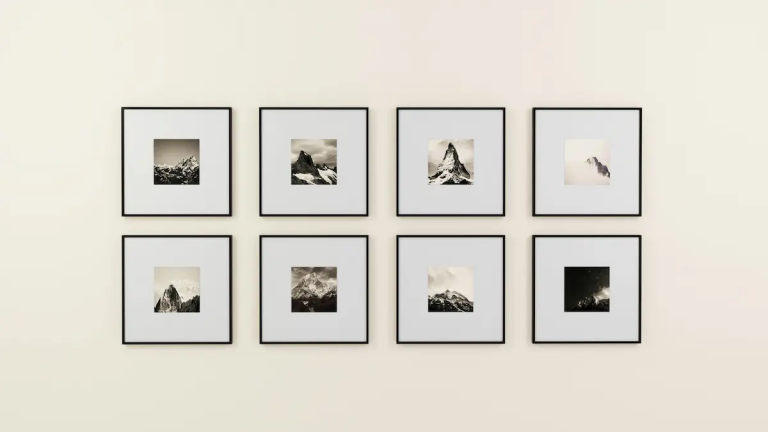
Why Nice Photos Are the Wrong Choice
Nice photos are the wrong choice more often than people realise.
They look clean. They feel safe. They rarely offend. And on the surface, they seem like the responsible option — especially when the goal is to avoid mistakes. But in practice, this instinct is one of the most common reasons images fail to do meaningful work.
This article examines why nice photos are the wrong choice in many real-world contexts, how “safe” visuals quietly undermine clarity and credibility, and why polite, non-committal images often do less than nothing once they are placed into a system that depends on judgement.
The appeal of “nice” images
Nice images are easy to accept.
They are well-lit. Balanced. Pleasant to look at. They sit comfortably alongside almost any content without drawing attention to themselves. In environments where decisions feel risky, this neutrality feels reassuring.
That appeal is precisely the problem.
Nice images minimise friction, but they also minimise meaning. They avoid commitment. They refuse to take a position. And when images are meant to clarify, reinforce, or guide attention, that avoidance becomes a liability.
This is why nice photos are the wrong choice so often: they optimise for acceptance instead of purpose.
Safety is not the same as usefulness
One of the most persistent misunderstandings in image selection is equating safety with effectiveness.
Safe images don’t challenge tone.
Safe images don’t sharpen interpretation.
Safe images don’t introduce tension or specificity.
They also don’t do much work.
In systems where images are meant to support decision-making — whether that’s choosing a service, understanding an idea, or trusting a source — safety becomes a form of withdrawal. The image is present, but it is not participating.
This is where bland photography quietly replaces useful photography. The image isn’t wrong enough to remove, but it isn’t right enough to help.
Polite images and the cost of non-commitment
Polite images are rarely criticised, which is why they survive.
They don’t provoke objections. They don’t feel inappropriate. They don’t demand justification. But politeness in visuals often reads as hesitation. The image refuses to say anything clearly, and the page inherits that hesitation.
Non-committal images signal uncertainty even when the text is confident. Over time, this disconnect erodes authority. The message says one thing; the visuals hedge.
This is another reason nice photos are the wrong choice in serious or decision-driven contexts. They soften intent when clarity is required.
When “nice” becomes a substitute for judgement
Nice images are often chosen when judgement is deferred.
Instead of asking what this image is responsible for, the decision becomes which image won’t cause trouble. That shift matters. The first question demands intent. The second rewards passivity.
This pattern shows up repeatedly in image libraries and stock selections. Faced with abundance, people default to images that feel universally acceptable. The result is visual sameness — interchangeable photos that avoid mistakes by avoiding meaning.
Choosing the right images requires committing to what the image is meant to do. Nice images rarely survive that test.
Nice images and the fear of being wrong
Nice images are rarely chosen because someone believes they are the best possible option. They are chosen because they feel defensible.
In many real-world environments, image selection happens under soft pressure. Deadlines exist. Stakeholders hover. Approval matters. Under those conditions, the cost of being wrong feels higher than the cost of being vague.
Nice images reduce that perceived risk.
They are easy to justify.
They resemble what already exists.
They are unlikely to draw criticism.
This is not laziness. It is a rational response to environments where visual decisions are visible but their consequences are hard to measure. If an image fails quietly, no one is blamed. If an image feels too specific or assertive and draws objections, the choice becomes personal.
So people hedge.
This fear of being wrong subtly reshapes visual standards. Instead of asking whether an image strengthens meaning, the question becomes whether it can be defended if challenged. That shift matters. The image is no longer selected for what it does, but for how safely it can exist.
Over time, this creates a visual culture built on permission rather than intent. Images are approved, not chosen. The system rewards restraint, not clarity.
This is one of the deepest reasons nice images persist. They don’t just feel safe — they protect the decision-maker. And when protection becomes the priority, commitment disappears.
Understanding this helps reframe the problem. The issue isn’t that people prefer nice images. It’s that the environment encourages avoidance over judgement.
Why nice photos dilute credibility
Images carry implied signals whether we intend them to or not.
They signal seriousness.
They signal confidence.
They signal care.
When visuals are overly polite, those signals weaken. The site may not look bad, but it begins to feel generic. Thoughtful content sits alongside imagery that feels undecided.
This is how credibility erodes quietly. Nothing breaks. Nothing stands out. But nothing reinforces trust either.
This erosion is subtle, which is why it’s so common. And it’s why nice photos are the wrong choice when credibility matters more than comfort.
This mirrors a broader pattern explored in Why Good Photos Fail on Websites, where images that look acceptable still weaken clarity and trust once they are placed into real page systems.
The illusion of professionalism
Nice images often masquerade as professionalism.
They meet surface-level expectations: clean composition, agreeable colour, neutral subjects. But professionalism is not about avoiding mistakes. It’s about consistency, intention, and responsibility.
An image that looks professional but doesn’t contribute meaningfully is still a weak decision. Over time, these decisions accumulate. The visual language becomes soft. Standards drift.
This is the same pattern discussed in Choosing the Right Images: A Practical Decision Framework, where image selection succeeds only when responsibility is defined before aesthetics are considered.
Editorial contexts expose the problem clearly
Editorial environments make the limits of nice images obvious.
In journalism, images are chosen to frame understanding, not to decorate space. Editors routinely reject technically strong photographs because they don’t clarify the story or carry the right weight.
Discussions around photo selection in publications like The New York Times highlight this tension clearly: the most visually pleasing image is often passed over in favour of one that better supports meaning, context, or consequence.
Editorial judgement makes visible what many websites obscure — that visual comfort is not the goal.
How nice images flatten visual hierarchy
One of the least obvious effects of relying on nice images is how they flatten visual hierarchy.
Hierarchy depends on contrast. On emphasis. On certain elements carrying more weight than others. When images are consistently polite and evenly toned, that structure collapses.
Nice images are designed to blend. They avoid extremes. They don’t demand attention. When every image behaves this way, nothing signals importance. Lead images feel no different from supporting ones. Decorative images feel indistinguishable from functional ones.
The page becomes visually democratic — and conceptually weak.
Readers rely on hierarchy to navigate meaning. They subconsciously look for cues about what matters first, what can be skimmed, and where attention should settle. When images refuse to differentiate themselves, that guidance disappears.
The result isn’t confusion so much as fatigue. The page feels heavier. Slower. Less decisive.
This is why even well-designed pages can feel oddly flat when populated with consistently nice imagery. The images are not wrong individually, but together they erase contrast.
Committed images behave differently. They know when to lead and when to recede. They accept unevenness because unevenness is how hierarchy is expressed. One image carries weight so others don’t have to.
Nice images resist that unevenness. In trying to be agreeable everywhere, they end up useful nowhere.
Once you see this, it becomes difficult to unsee. Pages that rely on nice imagery often feel visually calm but cognitively demanding — the reader has to work harder to extract meaning because the visuals refuse to help prioritise it.
When nice images actively work against the page
Nice images don’t just fail to help. Sometimes they actively interfere.
They can soften urgency.
They can flatten contrast.
They can reduce specificity.
When an image introduces a tone that the text does not support, the reader experiences friction. The page feels less decisive. The message loses edge. The image hasn’t added confusion — it has introduced doubt.
This is why nice photos are the wrong choice in contexts where direction, authority, or distinction matter.
A simple test for “nice” failure
A quick way to identify whether a nice image is the wrong choice is to ask:
What would change if this image were removed?
If the answer is “not much,” the image is decorative by default. Decorative images are not inherently bad — but when they replace functional ones, they dilute the system.
Nice images often survive because they are harmless. Over time, harmless becomes meaningless.
The alternative: committed images
The opposite of a nice image is not an ugly one. It is a committed one.
Committed images have a role.
They accept responsibility.
They clarify something specific.
They may be quieter or more restrained, but they are intentional. They support hierarchy instead of floating alongside it. They reinforce tone instead of smoothing it.
Once images are chosen this way, the need for niceness disappears.
Why this keeps happening
The persistence of nice images is understandable.
They reduce decision anxiety.
They feel safe under scrutiny.
They rarely trigger internal debate.
But avoiding debate is not the same as making a good decision. And this is the final reason nice photos are the wrong choice so often: they allow selection to happen without commitment.
Closing thoughts
Nice photos are the wrong choice when images are expected to do real work.
They are easy to approve, easy to place, and easy to forget. But in systems that rely on clarity, trust, and judgement, ease is rarely the right metric.
Images should not exist to avoid mistakes. They should exist to support meaning.
Once that responsibility is understood, niceness stops being a virtue — and starts being a warning sign.