Visual Standards: What Good Photography Means in Practice
Good photography is one of those ideas that feels settled until you have to rely on it. Most people can recognise a photograph they like. Many can even agree, in the moment, that an image is good. The difficulty appears later, when that image has to do something—sit alongside other images, represent a place, support a piece of writing, carry meaning over time, or survive being seen by people who weren’t there when it was made.
That’s when certainty starts to soften. The image hasn’t changed, but confidence in it has. What once felt obvious becomes debatable. What once felt strong begins to feel conditional. And for many photographers, creators, and image users, this is where frustration quietly accumulates: if the photo is good, why does it keep causing problems?
The instinctive response is to assume something is missing. Better execution, sharper detail, stronger editing, more intention. But in most cases, the issue isn’t quality in the usual sense. It’s the absence of clear visual standards—shared, working criteria that determine whether an image is fit for its role, not just pleasing in isolation.
This distinction matters more than it first appears. Without standards, every image decision becomes heavier than it needs to be. Selection slows down. Confidence erodes. And photography starts to feel less like a practice and more like a series of small arguments with yourself.
The hidden assumption behind good photography
The reason good photography causes so much confusion is that most people carry an unspoken assumption: that quality is inherent. That a good image contains its goodness inside itself, visible to anyone who looks closely enough. This belief isn’t unreasonable. In many situations—competitions, portfolios, single-image posts—it appears to hold true. Strong images do stand out. Weak ones do tend to disappear.
The problem is that this certainty is situational. It depends on isolation. One image. One moment. One set of expectations. As soon as the context widens, agreement thins out. An image admired in one setting feels out of place in another. A photograph that looks compelling on its own becomes distracting when placed next to others. Nothing is technically wrong, yet something feels off.
This is usually where debates begin. People argue about mood, style, impact, or intent, often without realising that they are arguing from different, unnamed criteria. Each person believes they are defending quality, when in fact they are defending a private definition of what quality should mean here.
This is where visual standards photography begins—not as a claim about what is good, but as an attempt to surface the criteria by which images succeed or fail once they are used, not just admired.
Taste, judgement, and why decisions stall
Taste is immediate. It’s fast, intuitive, and personal. It’s also essential. Taste is how people develop a point of view, recognise patterns they care about, and decide what draws their attention. The mistake for good photography is not relying on taste—it’s asking taste to do the work of standards.
Judgement operates differently. Judgement weighs context. It considers constraints. It asks not only do I like this? but does this hold up where it needs to live? Judgement is slower to develop, but once established, it reduces friction rather than increasing it.
Most image conflicts arise when taste and judgement are confused. Someone reacts negatively to an image and explains it as a quality issue, while someone else defends it as a matter of preference. The disagreement feels personal because the underlying criteria haven’t been named. Without shared standards, there is no neutral ground to resolve the difference.
This confusion shows up most clearly during selection. Choosing between images should be a narrowing process. Instead, it often feels like a reset. One moment sharpness seems decisive. The next, atmosphere. Then consistency. Then emotional pull. Each comparison silently changes the rules. The result is hesitation, even when the images themselves are strong.
Standards stabilise this process. They don’t remove taste, but they give it boundaries. They clarify what matters in this situation, allowing judgement to operate without reinventing itself every time.
What standards are—and what they are not
The word “standards” tends to provoke resistance because it carries baggage. Rules. Rigidity. Uniformity. A fear of losing individuality. In practice, working visual standards behave very differently.
They are not style guides, though they can inform them.
They are not aesthetic ideals, though they influence taste.
They are not technical checklists, though they affect how images are evaluated.
Standards are thresholds. They define the minimum conditions an image must meet to function reliably in its intended role.
This framing changes everything. Instead of asking whether an image is impressive, expressive, or beautiful in the abstract, standards ask whether it is sufficient. Clear enough. Consistent enough. Appropriate enough to do its job without drawing attention for the wrong reasons. This is where we start to really understand the meaning of good photography.
Thresholds are quiet by nature. Once crossed, they disappear from conscious thought. You stop noticing them because nothing is wrong. This is why standards are often invisible until they’re missing. When they are unclear or absent, every decision feels exposed. When they are present, decisions feel lighter—not because they are careless, but because they are grounded.
Ideals create pressure; thresholds create movement
One of the most common traps in photography is aiming for ideals without realising it. Ideals are vague by definition. They suggest improvement without specifying an endpoint. There is always room to refine, adjust, elevate. This can be motivating in small doses, but over time it becomes paralysing.
Thresholds, by contrast, create movement. They define a point at which a decision can be made and energy can move forward. This doesn’t mean settling for mediocrity. It means recognising when further refinement no longer improves the image’s ability to function in context.
This distinction matters because good photography rarely exists alone. Images live in systems—collections, pages, sequences, archives. In these environments, consistency and reliability often matter more than peak excellence. An image that is exceptional but disruptive can do more harm than one that is quietly competent.
Thinking in thresholds reframes ambition. The goal shifts from making every image as good as possible to ensuring every image meets the standards required of it. Once that bar is met, attention can move to the next decision. Over time, this produces work that feels calmer, more coherent, and more intentional, even when individual images are understated.
How missing standards reveal themselves
Most people don’t notice the absence of standards directly. They notice its symptoms.
Selection takes longer than it should. Images are revisited repeatedly without new insight. Decisions are deferred because nothing feels conclusively right or wrong. People hold on to “options” long after they should have been resolved.
Editing becomes excessive. Small adjustments pile up, not because the image needs them, but because something still feels unsettled. The work becomes more polished without becoming more convincing.
Collections drift. Each image makes sense on its own, but together they lack gravity. The work feels inconsistent without any single image being obviously at fault.
Feedback becomes vague. Comments circle around feelings rather than specifics. “I’m not sure,” “something’s off,” “it doesn’t quite fit.” Without standards, these reactions can’t be translated into action.
These are not failures of skill or effort. They are signals that thresholds haven’t been defined. The work is asking a question that hasn’t been answered yet.
Why common fixes don’t solve the problem
When these symptoms appear, the natural response is to improve the image itself. Better capture. More careful editing. Stronger execution. These efforts are rarely wasted, but they often fail to resolve the underlying issue.
Technical improvement raises the ceiling of what an image could be, but it doesn’t define the floor of what it needs to be. Without standards, refinement has no natural stopping point.
Comparison is another common strategy. Looking at admired work can sharpen taste, but it also introduces external criteria that may not match the image’s purpose or constraints. Chasing those benchmarks can destabilise judgement rather than clarify it.
This is why looking at award-winning or contest-selected images—such as those highlighted by National Geographic—can sharpen taste, but rarely helps define usable standards, because the selection criteria are implicit, contextual, and tied to editorial goals rather than everyday decision-making.
Consistency tools—presets, rules, templates—are often applied too late. They can enforce standards once defined, but they cannot substitute for the thinking that creates them. When standards are vague, tools become cosmetic.
The reason these fixes fall short is simple: they operate downstream. Visual standards live upstream, shaping what is noticed, what is prioritised, and what is considered acceptable before any technical decisions are made.
Standards as support for judgement
A common fear is that standards will flatten intuition or limit creativity. In practice, the opposite is usually true.
Judgement without standards is reactive. It responds to each situation as if it were new. Judgement with standards is cumulative. It builds on past decisions, reducing the need to re-litigate fundamentals.
Once standards are understood as thresholds rather than ideals, image selection shifts away from personal preference and toward clearer decision-making based on suitability and context.
Standards don’t replace intuition; they protect it. By removing irrelevant considerations, they allow intuition to focus where it matters most. Decisions become faster, not because they are careless, but because they are informed.
This is where visual standards photography reveals its deeper value. It is not about controlling outcomes, but about stabilising judgement over time. As standards clarify, photographers stop scanning images for impressive features and start recognising structural qualities: clarity of intent, balance of attention, coherence with surrounding material.
These qualities are harder to articulate, but easier to trust once recognised. They form the backbone of consistent work, even as subjects, styles, and contexts evolve.
Consistency as an outcome, not a goal
Consistency is often treated as something to be imposed. In reality, it emerges naturally when standards are clear. When images are selected against the same thresholds, they begin to relate to one another without effort.
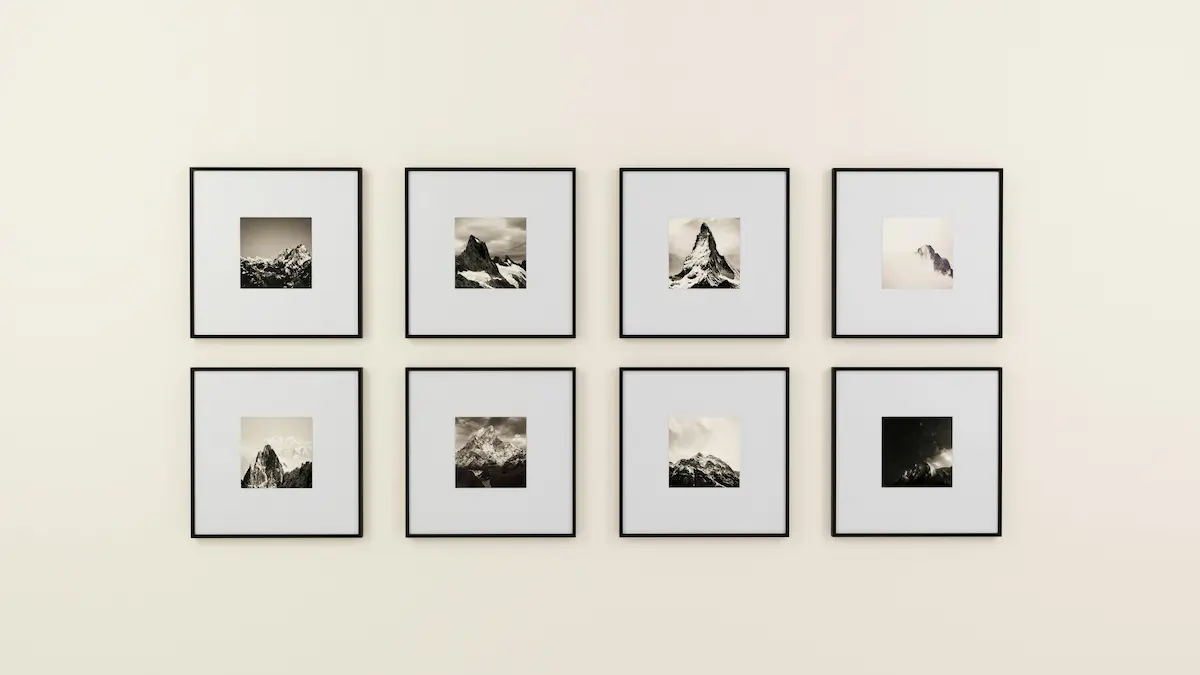
This becomes especially clear when images are used in structured environments, where photographs are judged less by how they look in isolation and more by how well they perform a defined role within a page or layout.
This matters more than many people realise. Viewers rarely encounter images in isolation. They experience bodies of work. Over time, consistency builds trust. It allows attention to move from evaluating each image to engaging with what the work is saying as a whole.
Peak quality can impress briefly. Consistency sustains interest.
Standards act as memory. They carry lessons forward, preventing the same mistakes from being relearned repeatedly. They allow work to evolve without drifting. And they do this quietly, without requiring constant vigilance.
A working definition of visual standards
For standards to be useful, they must be simple enough to apply and flexible enough to adapt. Overly rigid definitions collapse under real-world variation. Overly vague ones offer no guidance.
A practical definition is this:
Visual standards are the minimum set of qualities an image must meet to reliably serve its intended role, across time and context.
This definition anchors standards to function rather than taste. It frames quality as sufficiency rather than superiority. And it recognises that standards operate over time, not just in single moments.
From this follow several implications. Standards are contextual. They change with use. They are comparative. They matter most when images exist alongside other images. And they are learned, emerging through attention to outcomes rather than rules imposed in advance.
Framed this way, visual standards photography becomes a practical discipline. Not about declaring what is good, but about ensuring that images hold up when they are relied upon.
External confirmation, not justification
This way of thinking is not unique to photography. In many visual and design disciplines, quality is understood less as an abstract ideal and more as a set of functional criteria shaped by use. Recognised industry authorities consistently emphasise clarity, consistency, and fitness-for-purpose over isolated excellence.
The relevance here is not academic. It is practical. Systems that rely on visual material—whether interfaces, publications, or brands—cannot afford to treat every image as a standalone artefact. They require reliability. Photography is no different. It simply expresses these principles through images rather than layouts or components.
(The specific authority reference can be inserted here to reinforce this point once final placement is agreed.)
Redefining “good” without lowering ambition
When standards are clear, photography changes character. Decisions become calmer. Confidence becomes quieter. Work becomes easier to live with, not because it is less ambitious, but because ambition is directed more precisely.
Good photography, in practice, is rarely about standing out. It is about holding up. About doing its work without friction. About remaining trustworthy as contexts shift and time passes.
Seen this way, visual standards photography is not a constraint on creativity. It is a foundation that allows creativity to operate without constant doubt. And in a medium saturated with images, that stability is not a compromise—it is a strength.